The Tyranny of Glass: How the Obsession with Transparency Has Shattered Modern Trust
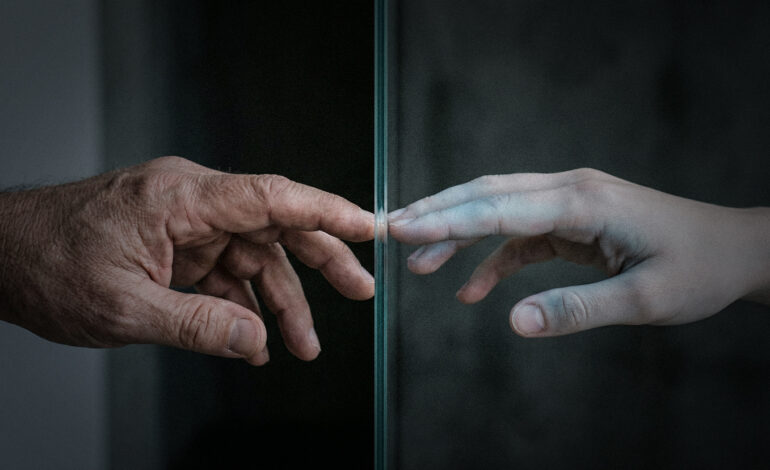
If sunlight is the best disinfectant, as U.S. Supreme Court Justice Louis D. Brandeis asserted in 1914 while advocating for transparency against abuses of power, why does our society today seem blind in the face of such clarity? We are living in the golden age of exposure. Governments are opening up their data, companies are laying their processes bare, and individuals are sharing their daily routines in real time. The promise was crystal clear: more information would generate more truth, and the truth, in turn, would forge unshakable trust between institutions and citizens.
What we have reaped, however, is exactly the opposite. The more transparent we become, the more suspicious we grow. This is the great paradox of our time: transparency has not saved democracy or human relationships; it has paralyzed them.
We must, first and foremost, make a crucial distinction. Transparency, as a means of holding power to account, is an indispensable pillar of democracy. The problem arises when it becomes an all-encompassing principle, an absolute moral value that demands complete, continuous, and unrestricted disclosure. At that point, transparency ceases to be a tool and begins to function as a dogma—and dogmas rarely produce healthy societies.
This provocative opening is not merely a rhetorical exercise, but a reflection of a measurable crisis. If overexposure were the cure for social ills, Brazil would be an oasis of mutual trust, given its deep immersion in the digital age and social media. The data, however, points in the opposite direction. According to the Social Trust Index (ICS), measured by Ipsos-Ipec in 2025, the indicator fell to 56 points, the lowest level since 2018, affecting virtually all institutions evaluated. Even more revealing is the international data showing that only 7% of Brazilians say that “most people are trustworthy,” placing the country among the worst in the world in this regard. The equation linking increasing transparency to increasing trust has failed unequivocally: the former has expanded exponentially, while the latter has evaporated.

The crusade against secrecy
To understand how we arrived at this precipice, we must revisit recent history. The turn of the 20th to the 21st century was marked by a moral crusade against the so-called “culture of secrecy.” The WikiLeaks phenomenon, in the late 2000s, symbolized this moment with epic force. The massive leak of American diplomatic and military documents cemented the idea that secrecy, in and of itself, was a form of corruption. Radical transparency became a new secular religion.
What began as a protest against specific abuses eventually crystallized into a normative paradigm. At the institutional level, this belief took shape in legislation around the world. In Brazil, the Access to Information Act, enacted in 2011, was hailed as the definitive triumph of democracy over government opacity. Later, the General Data Protection Law attempted to organize the informational chaos, but kept the central premise intact: the control and disclosure of information would be the key to freedom. By turning transparency into a fetish, we have forgotten that it is merely a means, not an absolute moral value.
Too much data becomes toxic
The root of this failure lies less in politics and more in human biology and psychology, now crushed under the weight of “infoxication”—the toxicity caused by an excess of data. A study by the Harvard Business Review revealed that 86% of corporate leaders suffer from information overload, which leads to decision fatigue and operational paralysis. When we demand total transparency, we flood the system with so much noise that critical judgment breaks down. The information that should enable action ends up shackling it. When everything needs to be explained, nothing can be decided.
The Korean-German philosopher Byung-Chul Han identifies a silent violence in this impulse. The demand for transparency becomes all-encompassing, reducing everything to the surface and eliminating depth, ambiguity, and silence. By banishing mystery, it also eliminates the space where genuine trust can emerge.
Trust, by definition, requires taking a leap of faith. If I know everything about you, if I monitor your every move, I don’t need to trust you—I just need to control you. Total transparency does not strengthen trust; it replaces it with surveillance.
This logic has particularly harmful effects on scientific and political institutions. Researcher Byron Hyde, from Bangor University in the United Kingdom, has demonstrated the so-called “transparency paradox”: depending on what is revealed, excessive exposure can diminish—rather than increase—public trust. When scientific institutions lay bare the normal uncertainties of the research process, methodological flaws, or minor conflicts of interest, a public accustomed to expecting infallibility reacts with distrust and skepticism.
This does not mean advocating for a science that is opaque or authoritarian. The problem arises when transparency is offered without context, without scientific education, and without mediation. Exposing the imprecise process of discovery as if it were a finished product fuels conspiracy theories and denialism. The public does not want to see “how the sausage is made.” A behind-the-scenes look, far from fostering empathy, often provokes revulsion.
The reversal of values regarding transparency leads to false sincerity
In politics, the effect is even more disturbing. As journalist and philosopher Hamilton dos Santos observes, drawing on Slavoj Žižek, contemporary populist leaders engage in a curious reversal: when they lie brazenly or explicitly violate rules, this does not provoke moral outrage among their supporters. On the contrary, it creates a sense of “sincerity.”
In a world perceived as opaque and manipulative, the politician who lays bare his flaws without reservation is seen as the only one who is truly “transparent.” Transparency becomes detached from truth and ethics and turns into an aesthetic. The blatant lie comes to function as a new form of honesty.
An institutional example illustrates how trust can replace transparency without compromising a system’s integrity. The English legal system, considered one of the most robust in the world, operates with clear limits on disclosure. In the case R v Derby Magistrate’s Court, ex parte B (1996), the House of Lords ruled that legal privilege regarding communications cannot be outweighed by other interests. The system’s functioning does not depend on constant surveillance, but rather on trust in the barrister’s professional integrity. His personal credibility is always at stake. He is honest not because he is monitored, but because lying would destroy his reputation. Here, institutionalized trust replaces defensive transparency far more effectively.
Too much light is just as blinding as darkness
Given this scenario, the conclusion is inevitable: we must restore the value of opacity and rebuild credibility. Too much light is just as blinding as absolute darkness. Complex societies cannot function without areas of shadow, without the right to be forgotten, without the curtain that separates the stage from the backstage. Diplomacy, political negotiation, artistic creation, and even intimate relationships require privacy to flourish.
This is not about defending corruption or authoritarianism, but about recognizing that transparency needs to be balanced, not idolized. An excess of information breeds cynicism because it exposes human and institutional weaknesses on a scale that our psyche cannot process. When we see cracks in every wall, we stop believing that any building can remain standing.
Perhaps the greatest threat to our democracy and our sanity is not what governments and corporations hide, but what they incessantly show us. Drowning in an ocean of data, we have lost the ability to distinguish wisdom from noise and have become easily manipulated. Trust does not arise from open spreadsheets or cameras running 24 hours a day. It happens in the dark, when we decide to believe in another person, not because we have all the evidence, but precisely because we do not. Until we learn to draw the curtains again, we will continue to live under the tyranny of glass: exposed, vulnerable, and deeply distrustful.