Dark Horse and the Fine Line Between Culture, Money, and Power
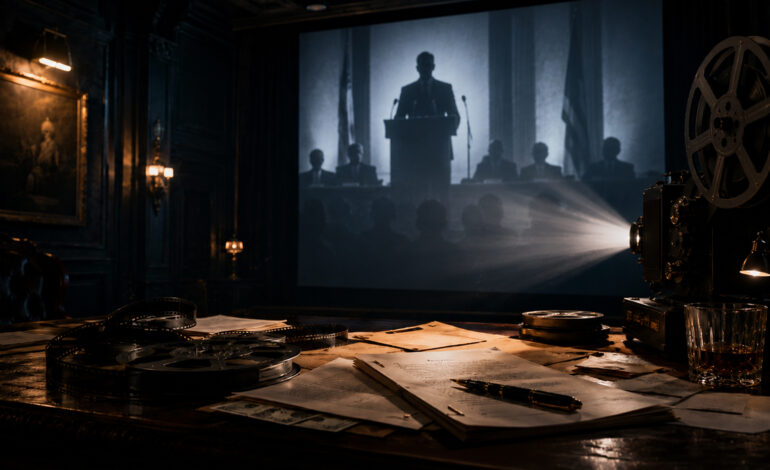
The debate surrounding the biopic about Jair Bolsonaro raises, in a contemporary context, an age-old question: when does cultural expression remain within the realm of artistic freedom, and when does it begin to produce politically sensitive effects that require heightened public scrutiny?
As Martin Scorsese has observed, cinema is about what makes it into the frame and what stays out. Few art forms shape the public’s perception of reality with such power. However, when the spotlight shifts from the screen to the behind-the-scenes world of financing, the aesthetic question is joined by another, of an institutional nature: who pays, why they pay, and what political effects this investment might produce.
The recent case involving the film *Dark Horse*, a biopic about former President Jair Bolsonaro, comes at precisely this turning point. More than just a one-off incident, it reignites a recurring debate in contemporary democracies about the close ties between cultural production, economic interests, and strategies of influence.
Reports already released suggest an arrangement in which aesthetics, visibility, and private capital intersect in a politically sensitive manner. The published reports point to interactions between political figures, producers, and a businessman in the financial sector who is under investigation. A situation that, in and of itself, does not warrant definitive conclusions, but calls for analytical caution and rigorous scrutiny. The decisive issue lies not only in the possible impropriety of a specific project, but in the structural problem it highlights: to what extent can art be mobilized to confer legitimacy or create zones of opacity around interests that extend beyond the cultural sphere.

Interestingly, the same banker also expressed interest in financing projects about other figures across the political spectrum. While the producer admitted to providing support for a film about Michel Temer, an attempt to collaborate on an Oliver Stone documentary about Luiz Inácio Lula da Silva was rejected, with the director refusing to provide any funding. The alleged financier’s ideology, it seems, is power for power’s sake.
Art, Prestige, and Symbolic Domination
The relationship between art and power is far from new. Throughout history, artistic patronage has served not only to promote beauty, but also to consolidate prestige, authority, and public memory. During the Renaissance, for example, the Medici family’s support of artists such as Michelangelo and Botticelli helped establish Florence as the cultural center of Europe and, at the same time, reinforced the political and symbolic centrality of its patrons. In the 17th century, Louis XIV turned Versailles into a stage for the display of absolutism, integrating architecture, painting, and music into the assertion of royal power.
In the 20th century, this exploitation reached an industrial scale. The case of Leni Riefenstahl, whose film *Triumph of the Will* (*Triumph des Willens*, 1935)—commissioned by the Nazi regime—remains a classic example of how state resources and cinematic language can converge to produce political propaganda of high aesthetic effectiveness.
In a different context, as seen in the history of Eastern Europe, the Soviet Union also mobilized cinema as a central tool for ideological indoctrination and the representation of power. Although these examples are not equivalent in terms of context or severity, they illustrate a fundamental commonality: far-reaching cultural productions are rarely politically neutral when subordinated to clear projects of power.
In Brazil, this approach also has significant precedents. Getúlio Vargas’s Estado Novo institutionalized mechanisms of control and symbolic dissemination through the Department of Press and Propaganda (DIP), which was involved in both censorship and the construction of an official narrative for the regime. In the private sector, figures such as Assis Chateaubriand demonstrate how cultural patronage could be linked to broader strategies of influence; his role in the founding of MASP is inseparable from his political and media clout. This reveals the historical difficulty of completely separating patronage, prestige, and power in the Brazilian context.
However, interference does not always take the form of direct funding. In certain cases, it manifests itself as pressure on the very language of the work. The production of *The Godfather* became a prime example in this regard: to make filming in New York possible and reduce tensions with groups linked to the world depicted in the film, the crew removed expressions such as “mafia” and “La Cosa Nostra” from the script. This episode suggests that the struggle surrounding cinema is not confined solely to the realm of capital, but also extends to control over vocabulary and the public framing of power.
Cinema, Funding, and Voter Sentiment
In the contemporary world, the issue takes on new forms. Large-scale audiovisual production combines a high potential for symbolic persuasion with complex financing structures. In the case of Dark Horse, the disclosed budget draws attention due to its magnitude and inevitably raises questions about the strategic interests of investors. This fact does not prove wrongdoing, but it explains why projects of this nature require enhanced transparency, especially when they revolve around figures of electoral significance.
The international debate offers useful insights. In the United States, the case Citizens United v. FEC (2010) has become emblematic for linking the discussion on political financing to the constitutional protection afforded to free speech. In India, in 2019, the biopic PM Narendra Modi was challenged for its potential interference in the electoral environment, leading to the postponement of its release. In both cases, the central issue was to discuss the extent to which cultural products can influence democratic processes when linked to campaign resources.
The Brazilian context itself offers a recent precedent. In October 2022, the Superior Electoral Court suspended the broadcast of a Brasil Paralelo documentary about Jair Bolsonaro until the end of the election campaign. At the time, the Court stated that the measure did not constitute censorship, but was intended to prevent the issue from gaining exponential traction under the guise of a documentary funded with substantial corporate resources. The episode is significant less for the political judgment it provokes than for the institutional precedent it established: the Brazilian Electoral Court has already recognized that audiovisual works, under certain circumstances and at sensitive moments in the electoral calendar, can affect the balance of the race. Art functions as a vehicle for narratives at decisive moments, and the line between cultural expression and image promotion can become dangerously blurred.
When Aesthetics Becomes a Tool
It is essential to make a fundamental distinction: nothing discussed here constitutes an objection to political cinema as a genre or democratic practice. Works that portray, criticize, extol, or question leaders, parties, and movements are a legitimate and necessary part of public debate. The real problem arises when artistic mediation ceases to be understood as expression, interpretation, or controversy and begins to operate, in a more or less opaque manner, as an instrument for reputational protection, strategic influence, or the indirect promotion of interests unrelated to the cultural merit of the work.
The recurrence of this phenomenon is not necessarily the result of an ongoing conspiracy, but rather of a structural affinity. Art embodies prestige, symbolic value, and the capacity to mobilize the imagination. Cinema, in turn, requires substantial investments, sophisticated production networks, and far-reaching distribution strategies. When these two dimensions converge, it creates an opening for economic and political actors to invest in cultural products not only out of aesthetic conviction, but also for the sake of reputation, access, and influence.
Public transparency and private opacity
The institutional implications of this type of situation are clear. When high-budget audiovisual productions are linked to the promotion of politically prominent figures, a zone of regulatory uncertainty emerges that Brazilian public debate has yet to adequately address. At what point does cultural investment remain within the realm of freedom of production, and at what point does it begin to produce effects analogous to those of indirect political support? The answer is far from simple. Still, the question is unavoidable and should occupy a more central position in legal, electoral, and cultural debates.
This context also helps put into perspective a common trope in Brazilian cultural discourse: the oversimplified opposition between public funding—viewed with suspicion—and private funding, treated as inherently virtuous. One of the merits of public incentive mechanisms is precisely that they enforce traceability, formal criteria, and accountability. In the case of direct private investment, however, although there is broad legal legitimacy in countless situations, the degree of transparency may be lower, which hinders scrutiny when the project involves politically sensitive figures or funds of controversial origin.
When controversies over funding or promotion arise, they tend to tarnish the public’s perception of the cultural sector as a whole, including legitimate support policies that operate with mechanisms for oversight and accountability. The institutional challenge in this scenario is twofold: to preserve artistic freedom while ensuring minimum standards of transparency so that projects with significant political impact do not become gray areas that are difficult to monitor. For oversight bodies and the Electoral Court, this means dealing with complex funding chains, opaque contracts, and dissemination strategies that can amplify political effects without formally presenting themselves as a campaign.
The point at which culture calls for democratic oversight
The Dark Horse case should not be treated as automatic proof of systemic corruption, nor can it be reduced to a one-off controversy with no public impact. What it clearly exposes is the fragility of the boundaries between cultural initiatives, private investment, and political influence when widely circulated works become entangled in electoral disputes or power plays. In mature democracies, this intersection cannot be normalized, especially when the opacity of funding makes it difficult to distinguish between legitimate artistic expression, reputational strategy, and indirect political support. The central issue, therefore, is not to disqualify politically engaged art, nor to presume irregularities where there is still room for investigation, cross-examination, and evidence. The point is another: democracies demand transparency proportional to the public impact of the projects circulating within their symbolic space. When cinema, money, and power converge during electorally sensitive periods, public debate cannot be naive; it must be institutionally lucid. Not to stifle artistic creation, but to prevent the language of culture from serving as a refuge for practices that, in any other form, would immediately attract scrutiny. It is in this intersection between freedom of expression and civic responsibility that the maturity of a democracy is largely measured.