The Court of Intolerance: Freedom of Expression and the Abyss of Digital Lynching
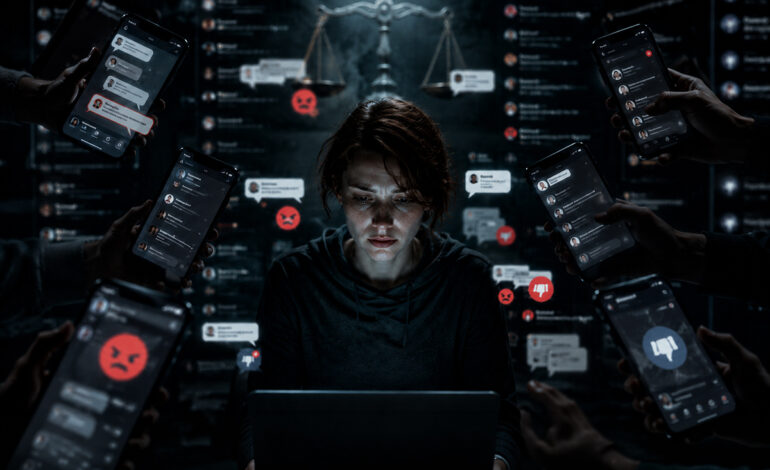
The history of Brazilian media is rife with episodes that have evolved from mere tragic mistakes into self-fulfilling prophecies. The Escola Base case remains the most instructive and cruel example of this phenomenon: an investigation into alleged child abuse in 1994 that, fueled by a media frenzy devoid of evidence, unjustly destroyed the lives of the owners and the institution’s reputation. At that time, lives were destroyed by the speed of unsubstantiated news, eagerly consumed by a public opinion thirsty for culprits. Today, this mechanism no longer depends on printing presses or television news. It has been democratized. Freedom of expression, a non-negotiable pillar of any functional democracy, faces its greatest stress test under the weight of algorithms and informal tribunals, where millions of ad hoc judges decide fates from behind glass screens. We are witnessing an explosion of online hate speech, an environment where legitimate dissent has, in many cases, been replaced by moral annihilation.
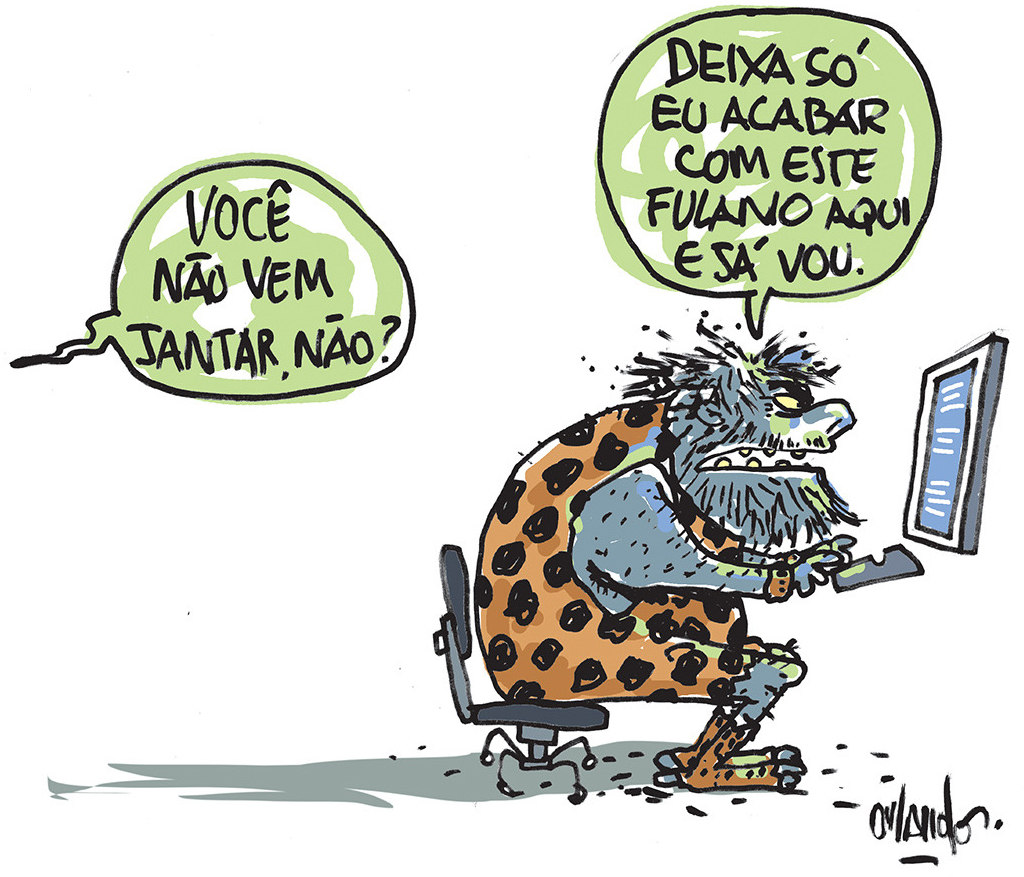
What we are witnessing is not the full exercise of a right, but its systemic distortion. As the jurist and thinker Hans Morgenthau rightly warns in his reflections on the harsh reality of power relations, the application of norms and the use of moralizing language often serve only to organize the appearance of force and make it palatable to public debate. In the digital realm, although social media also serves as vital spaces for legitimate mobilization, the right to speak has frequently been hijacked as a safe haven for meticulously organized disinformation campaigns. The challenge facing the contemporary jurist and the attentive citizen is to identify the exact point at which the individual right to express an idea becomes the unlawful act of destroying another person’s existence.
The Engineering of Disinformation and Media Judgment
Contemporary disinformation is not an accidental byproduct of technology. It is a deliberate strategy of influence. In analyzing the mechanics of power and exclusion, authors Steven Levitsky and Daniel Ziblatt point out that democratic erosion occurs when legal mechanisms and prerogatives are used to stifle opponents under the guise of formal legality. In the digital arena, this legality is freedom of expression itself, transformed into a weapon. On platforms such as X, Facebook, and TikTok, the tool of the moment is the assassination of reputations in media courts that disregard due process and the right to a fair hearing.
Recent events demonstrate how the line between the public interest and personal prurience has become dangerously blurred. The case involving businessman Daniel Vorcaro of Banco Master illustrates this distortion precisely. Regardless of any findings regarding his business activities, we have witnessed an indiscriminate exposure of people in his inner circle. His ex-girlfriend, who is neither under investigation nor accused, had private messages leaked and her life scrutinized on social media with no connection to corruption investigations or public relevance. This spillover into the family and personal sphere reveals that the line for disclosing and judging others’ lives has been crossed. When the privacy of third parties is sacrificed to fuel the media spectacle, press freedom ceases to fulfill its social function and begins to operate outside its ethical boundaries. Political scientist Robert Dahl notes that pluralistic competition requires public debate to be guided by a narrative hegemony that respects minimum rules of coexistence. However, what we see today is a fragmentation where visual impact or emotional shock take precedence over the truth and fairness of the facts.
This cycle is fueled by the architecture of Big Tech companies, which profit from the engagement generated by conflict and polarization. The speed with which a misinterpretation becomes ammunition for coordinated attacks proves that the time for reflection has been swallowed up by the urgency of the algorithm. A clear example occurred in March 2026, in the controversial case of the PowerPoint slide used by GloboNews. The channel aired a controversial graphic attempting to link political figures to businessman Vorcaro, a format that evoked the illegal practices of Operation Car Wash and sparked a strong public backlash. The broadcaster had to apologize for the material, which not only lacked journalistic rigor but also served as immediate fuel for the fury of social media. The media court does not seek legal truth; it seeks an immediate verdict that satisfies the audience.
The Limit of the Intolerable and the Ethics of Responsibility
The defense of free speech cannot be a blind dogma that ignores the reality of the victims. By distinguishing between the ethics of conviction and the ethics of responsibility, Max Weber reminds us that noble intentions do not absolve the agent of the foreseeable consequences of their actions. Applying this logic to the 21st century, the freedom to speak one’s mind is not, and can never be, a license to silence others through virtual lynching. If the expression of a thought results in direct incitement to violence or the systematic destruction of human dignity, the law must intervene forcefully.
In this context, a fundamental premise emerges that contemporary society seems to have forgotten: more important than having a right is knowing when not to exercise that right, when doing so violates human dignity. The French philosopher Simone Weil, in her work *The Deep Roots*, already warned that duty precedes right, being unconditional, while right is relative. Similarly, the political thinker Edmund Burke observed that men are qualified for civil liberty in exact proportion to their willingness to impose moral restraints on their own appetites, for society cannot exist without a power to control the will. True freedom, therefore, requires the virtue of self-restraint.
The challenge lies in implementing this intervention without opening the door to state arbitrariness or ideological control. Ironically, the use of the law to combat hate speech can itself become the very instrument of censorship that it is intended to prevent. Solutions that rely exclusively on empowering censorship bodies or creating crimes of opinion run the risk of turning the Constitution into a political weapon, as Levitsky and Ziblatt warn. The necessary balance requires a combination of pragmatic measures. First, strict civil liability must be established for platforms, not so that they act as prior censors, but so that they are held financially accountable when their recommendation algorithms deliberately promote illicit content or smear campaigns in exchange for engagement. Second, full transparency regarding the functioning of these algorithms must be a legal requirement, allowing for independent audits. Finally, it is imperative to restore self-restraint among public figures and the media. In a robust democracy, limits are imposed not only by law but by an awareness of the limits of one’s own power of speech.
Democratic Maturity and the Reconstruction of the Public Sphere
The collapse of digital civility casts immediate doubt on Brazil’s very social stability. If we are unable to coordinate an internal response to hate that preserves freedom, we will be merely reactive to successive institutional crises. Information chaos breeds legal uncertainty and political instability, factors that undermine the social fabric.
A nation’s health depends on a logical chain of forces. Without the political realism to recognize digital threats, there is paralysis. Without self-restraint in the exercise of rights, there is a democratic erosion that corrodes institutions from within. And without institutional stability, the country plunges into endless crises. We must understand that freedom of expression is a muscle that requires responsibility so as not to become a tool of oppression.
The case of Escola Base must remain a vivid reminder in our collective memory so that the mistakes of the past do not become the business model of the future. Between the silence imposed by censorship and the barbaric outcry of intolerance, the voice that criticizes and challenges—yet recognizes in others the sacred boundary of their existence—must prevail. Democratic maturity does not lie in the absence of conflict, but in the ability to manage disputes under clear rules and mutual respect. The future of our public sphere depends on our courage to defend freedom, imposing upon it the only legitimate limit: human dignity.