Part II – The Constitution as a Weapon: The Silent Erosion

Note to the reader – This is the second article in a trilogy on power and institutions in Brazil. In the previous article, we discussed how politics is, by nature, a tough and realistic game. If you haven’t read it yet, I invite you to check out Part I before continuing. In this second installment, we will demonstrate that acknowledging this realism does not imply accepting the unlimited exploitation of constitutional rules, at the risk of a silent erosion of democracy.
If the the first part of this analysis has shown that politics is inevitably a tough game, it is imperative to draw the line: there is a decisive difference between intense political strategy and the cumulative instrumentalization of the constitution. Contemporary literature on democratic collapse clearly points out that modern democracies do not die solely from military coups, but erode from within. As Steven Levitsky and Daniel Ziblatt have demonstrated, this erosion occurs when elected leaders use legal mechanisms to gradually expand their power, transforming institutions into tools for excluding opponents.
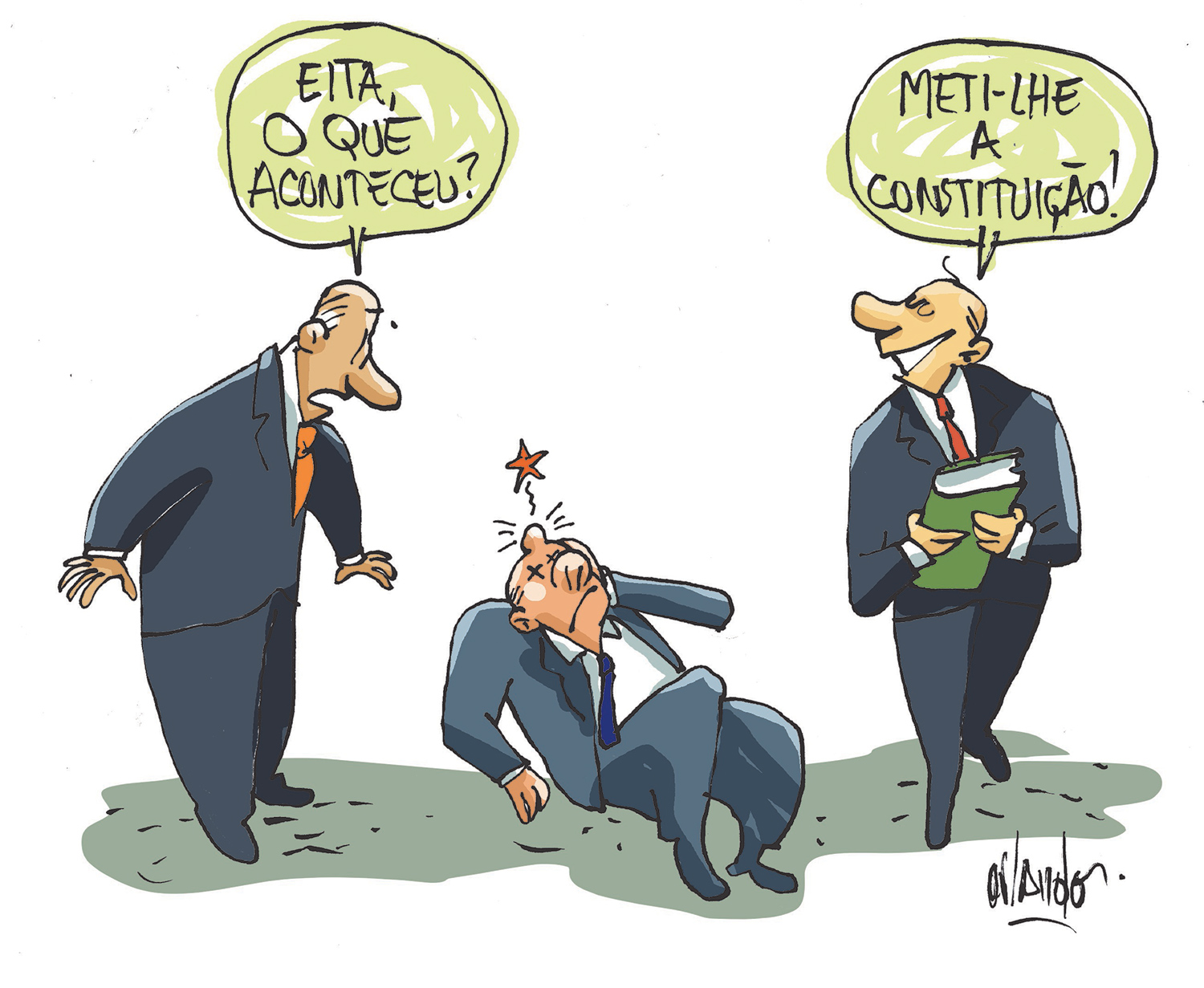
There is no visible break, but rather a continuous reinterpretation of the rules. The phenomenon is global and has clear echoes in Latin America, resembling the extreme use of executive powers observed in the United States and the judicial reforms in Hungary and Poland, carried out under the guise of formal legality. In all cases, the justification is the same: “it is constitutional.” In Brazil, the 1988 Constitution was designed with an architecture that broadened judicial oversight, expanded rights, and strengthened oversight mechanisms—a structure that proved virtuous and essential in the context of redemocratization. However, this same flexibility, when systematically exploited as a tool for political combat, generates serious side effects.
The Symptoms of Institutional Burnout
The systematic exploitation of constitutional limits gives rise to three main effects that undermine the health of the system. The first is the informal shift of power, in which decision-making centers migrate without any explicit amendment to the constitutional text, but through procedural and interpretive maneuvers. The second lies in the creation of cumulative precedents: each institutional innovation pushes the envelope to legitimize the next, creating a spiral where what was once an exception becomes the rule. The third is the erosion of trust, where the decisions of the courts and parliament come to be interpreted solely as strategic moves, stripping the institutions of their moral authority.
In this scenario, excessive judicialization turns any political defeat into a never-ending legal battle, stripping the popular vote of its final say. The budget ceases to be a planning tool and becomes an instrument for the structural realignment of power, while constitutional amendments become routine tools for momentary political accommodation. Taken in isolation, none of these elements disrupts the order, but their sum alters the very nature of the democratic regime. Solid democracies depend on an invisible yet vital element: the self-restraint of the actors. When this self-restraint is abandoned, the Constitution’s moderating function weakens. Hard-line constitutional maneuvering does not immediately bring down the regime; it silently erodes it, making it vulnerable to external shocks and extreme polarization. The real risk lies not in the victory of a specific power, but in the fact that all actors begin to operate permanently at the extreme limits of the rule.
This article was originally published on Canal Comtexto. Check it out!